Introduction
With more learners choosing automatic cars, driving instructors must decide whether to teach in manual, automatic, or both. But when it comes to dual control pedals, what are the differences between fitting them in manual vs automatic cars?
Dual Controls in Manual Cars
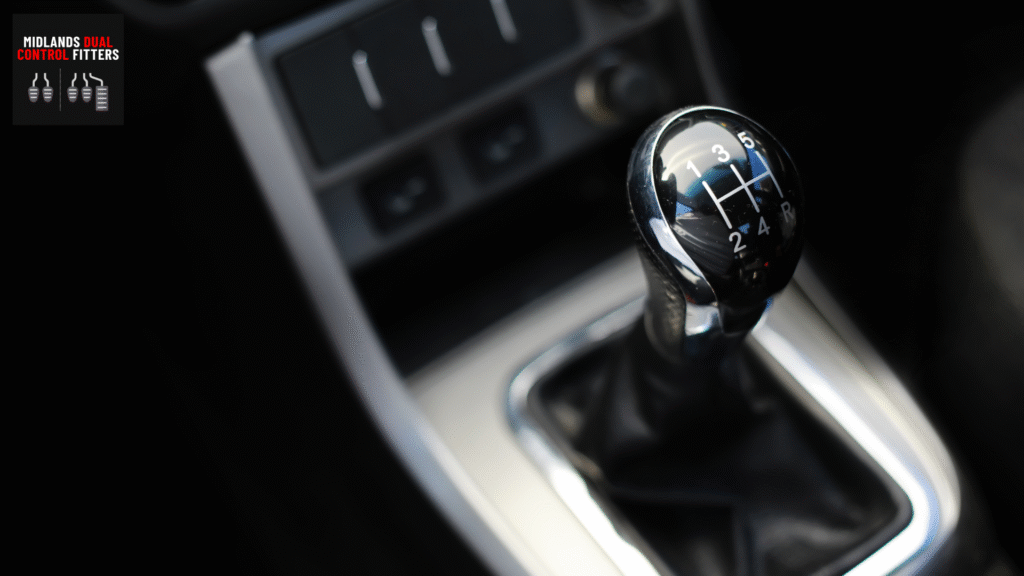
Manual cars require dual control pedals that connect primarily to the brake and clutch. This allows instructors to prevent stalling, assist with hill starts, and manage gear changes during early lessons. Manual dual controls are more complex due to the clutch linkage but are highly effective for traditional teaching.
Dual Controls in Automatic Cars
Automatic cars only require brake (and sometimes accelerator) dual controls. Since automatics don’t have a clutch, the installation is simpler and often cheaper. With the rise of electric vehicles, this form of dual control is becoming increasingly popular among instructors.
Pros and Cons for Instructors
- Manual Pros: Wider market of learners; pupils leave with a full UK licence (manual & automatic).
- Manual Cons: More mechanical wear; higher fitting complexity.
- Automatic Pros: Easier fitting, rising demand, future-proof with EV adoption.
- Automatic Cons: Learners only get an automatic licence; may reduce instructor’s client base.
Choosing the Right Setup
The best choice depends on your business model. If you want to future-proof and cater to the rising automatic market, automatic dual controls may be the way forward. If you want the widest possible client base, manual remains a strong choice.
Conclusion
Whether you’re teaching in manual or automatic, dual control pedals are essential for safe instruction. Our mobile fitting service installs DVSA-approved systems in both types of vehicles, ensuring your lessons run smoothly no matter your choice.